
Sanchayanam (also known as Sanchayana or Asthi Sanchayana)
Sanchayanam (also known as Sanchayana or Asthi Sanchayana) is a significant Hindu funeral ritual that involves the collection of the mortal remains (bones and ashes) of the deceased following cremation.
The word literally translates to “collection.” This ceremony marks a pivotal step in the journey of the soul, transitioning from the cremation fire to the immersion in holy waters.
1. When is it performed?
The timing of Sanchayanam varies based on regional customs, caste, and community traditions.
- Common Timing: It is most frequently performed on the 2nd, 3rd, 5th, or 7th day after the cremation.
- Odd Days: Tradition usually dictates that it be done on an odd-numbered day.
- Regional Variations: In South India (particularly Kerala), the 5th or 7th day is common. In North India, the 3rd or 4th day is more typical (“Chautha”).
2. The Ritual Procedure
While specific customs differ, the general process includes the following steps:
- Visit to the Cremation Ground: The close male relatives (usually led by the Karta or chief mourner) return to the cremation site.
- Purification: The site where the cremation took place is sprinkled with a mixture of water and milk (and sometimes gomutra) to cool and purify the embers.
- Collection of Asthi: The main fragments of bones (Asthi) are carefully collected by hand. This is done with great reverence. The remains are not swept but picked up individually.
- Placement in Kalash: The collected remains are placed inside an earthen pot (Kalash) or a cloth bag.
- Offerings: Simple offerings of flowers, food, or favorite items of the deceased may be placed at the site.
3. Asthi Visarjan (Immersion)
Once the Sanchayanam is complete, the remains cannot be kept inside the main house. They are usually kept outside (often hanging from a tree or buried safely) until they can be immersed.
- Immersion: The final step is Asthi Visarjan, where the remains are immersed in a holy river (like the Ganges), the sea, or a sacred body of water.
- Significance: This immersion symbolizes the return of the body’s elements to nature and facilitates the soul’s liberation (Moksha).
4. Cultural Significance
Soul’s Journey: It is believed that until the ashes are collected and immersed, the soul remains attached to the earth. Sanchayanam helps sever these earthly ties.
Closure: It provides a degree of physical closure for the family, seeing the final transformation of the body.
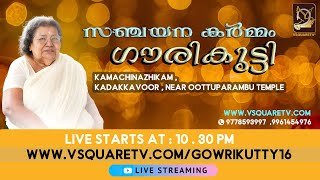
Gowrikutty Sanchayanam
Join us live for the Sanchayana Karma(Sanchayanam) – Gowrikutty ceremony happening tonight at 10:30 PM. Experience this traditional community event from KamachinazhiKakam, Kadakkavoor, near the revered Oottuparambu Temple. Witness the spiritual and cultural significance of Sanchayana Karma (Sanchayanam) as it unfolds
Live streaming service of Gowrikutty Sanchayanam
🌐 Watch the event live streaming exclusively on VSQUARE TV at www.vsquaretv.com and directly at www.vsquaretv.com/gowrikutty-sanchayanam
📞 For inquiries, contact us at 9778593997 or 9961454976.
Stay connected with the cultural heritage of Kerala through this immersive live broadcast. Don’t miss out on this unique spiritual celebration!
#Gowrikutty #SanchayanaKarma #Kadakkavoor #LiveStreaming #TempleEvent #VSQUARETV #KeralaCulture #Sanchayanam